

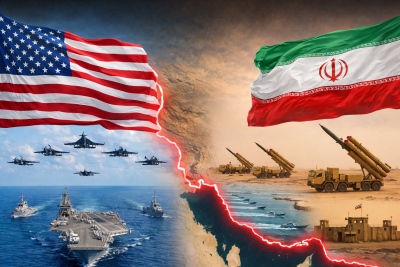
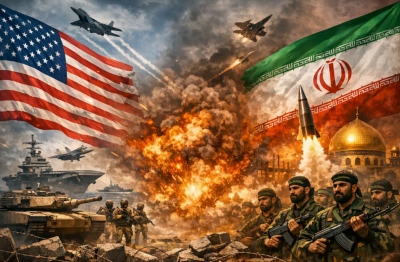
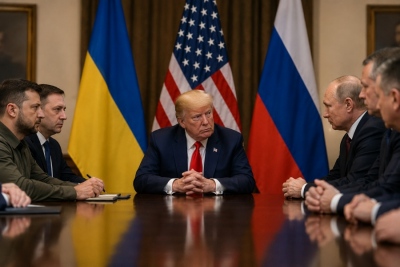
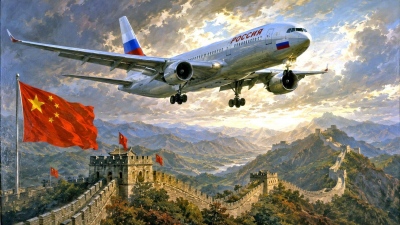
Any visit by Vladimir Putin to China naturally commands heightened global attention—particularly now, as the momentum of "changes happening once in a century" (a phrase first coined by Xi Jinping three years ago during his farewell ceremony at the Kremlin) triggers upheaval across almost every corner of the planet. Yet, this specific visit possesses its own unique characteristics—not least because it unfolds just days after Donald Trump’s own visit to Beijing. This timing is merely a coincidence, and the blame lies squarely with the Americans: they were forced to request that the Chinese postpone the visit from late March due to the prolonged war with Iran.
The responsibility of the Americans
As a result, Trump's itinerary was pushed close to Putin’s long-scheduled visit for the second half of May, drawing intense international scrutiny to both events: the second visit of President Trump to China and the 25th visit of Vladimir Putin. This is where the symbolism truly resonates—Putin is visiting China for the 25th time in 26 years. This track record spans everything from formal state visits to working trips and participation in multilateral summits. With Xi Jinping alone—who has led China for half the duration that Putin has led Russia—he has met more than 40 times. However, the profound level of their personal interaction, trust, and mutual understanding is not a consequence of the sheer number of meetings, but rather the driving cause behind them.
Symbolism
In fact, twenty-five could also be viewed as a milestone date for this visit—in just two months, 25 years will have passed since the signing of the Treaty of Good-Neighborliness and Friendly Cooperation. Putin and Xi are fully expected to extend it. Further bilateral agreements will be signed, and it is highly probable that new large-scale joint projects will be unveiled. Nevertheless, the defining feature of this visit is the atmosphere surrounding it—the broader international context. It is no exaggeration to state that Putin and Xi Jinping have never met during such a turbulent and tense period.
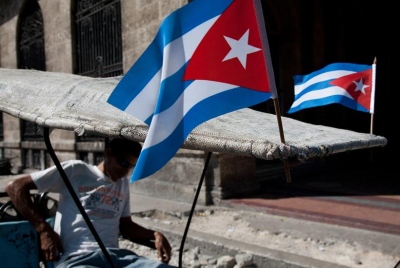
Over the past 13 years, they have confronted a wide array of severe challenges and trials, both shared and domestic. Yet, the concentration of global crises has never been greater—one only needs to look at the events of this year: the abduction of Maduro in Venezuela, the military campaign against Iran, the closure of the Strait of Hormuz, and the fuel embargo and threats directed at Cuba. All of these developments not only impact the core interests of our countries to varying degrees but also fundamentally destabilize the entire international landscape.
Reflection of a global crisis
Naturally, Trump has orchestrated all of this, but his actions are not so much the underlying cause as they are the consequence of a gathering storm and a direct reflection of a systemic, global crisis. The world is no longer just unstable—it is undergoing a profound, universal transformation, unpredictable in both its forms and manifestations. And although China and Russia are truly "standing back-to-back" (to use another Chinese idiom), our future—and particularly the future of our alliance, which constitutes "more than a military alliance"—is by no means predetermined once and for all. Even to survive, and above all to move forward, we must not only constantly coordinate, align, and synchronize our actions, but also jointly formulate answers to emerging challenges and structural problems. Therefore, the favorite Chinese formulation that Russo-Chinese cooperation "contributes significantly to global strategic stability and international justice" cannot remain a mere statement of fact. Even this fragile stability is being continuously undermined: neither Trump, nor the US, nor the West as a whole have any interest in allowing China and Russia to develop (either independently or together) within a relatively peaceful environment.
Time is the enemy of the West
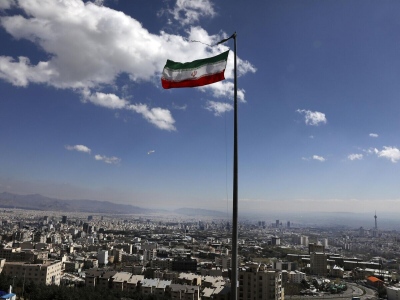
This is because time is simply not on the side of the West; time is its primary enemy. Yet, Western powers refuse to acknowledge this reality—and consequently, they designate Russia and China as their adversaries. They target our alliance even more aggressively. It is an alliance that has not been formalized as a rigid military bloc, but one that forms a system of broad international associations and potential coalitions around it—such as the SCO and BRICS. These frameworks are also being actively targeted: the most obvious example is Iran, which holds membership in both organizations. However, both Venezuela and Cuba represent critical arenas of global interaction between Russia and China. Under the current blockade, Russia supplies Cuba with crude oil and China dispatches solar panels, but we will not be able to shield the island from an American invasion (which, incidentally, Trump will not actually dare to attempt), just as we could not ultimately prevent the intervention against Maduro.
Trump undermines everything
Nevertheless, the limited scope of action available to Moscow and Beijing in the Western Hemisphere does not mean that America is winning decisively or successfully repelling the Chinese and Russians with its geopolitical adventures, particularly the Iranian one. Trump not only undermines international trust but also fuels deep-seated fear of the United States, thereby unlocking fresh opportunities for the blueprint of a future, post-American world order. Both China and Russia will actively seek to exploit this dynamic to their advantage, both individually and collectively. This is precisely what distinguishes the core agenda of the current high-stakes talks between Vladimir Putin and Xi Jinping.
www.bankingnews.gr


Σχόλια αναγνωστών