

Analysts argue that even with a US-Iran deal, the world should forget about oil prices at the $60 per barrel level
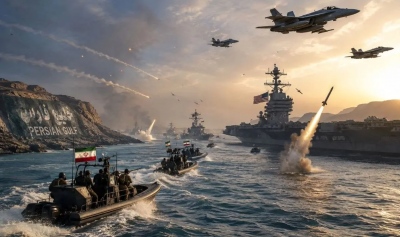
The agreement between the US and Iran, according to information from various sources, seems—once again—to be near... in fact, US President Donald Trump places it as early as this weekend. As reported, the deal is expected to be implemented in 4 successive phases, where the transition from one to the other will require the fulfillment of terms and commitments at each agreed stage. Iran enters this process significantly strengthened, as it possesses an extremely powerful geopolitical "card," which it acquired during the 40-day war and which it does not intend to relinquish. This concerns the sovereignty and control of the Strait of Hormuz, a "weapon" capable of influencing the global economy and energy markets whenever deemed appropriate and necessary, with all that this may entail for markets, oil, and inflation. Analysts warn that even after the end of the conflict, Tehran will retain the ability to influence international energy flows, imposing a new geopolitical "risk premium" on oil prices for years to come. This is undoubtedly a development that makes Iran a new global force to be reckoned with, and this is something the Iranians won from their latest war with the US and Israel.
Iran's influence
Iran has acquired a new source of influence over the global economy and does not appear willing to abandon it. Tehran proved that it can effectively block the most important global sea passage for oil using relatively few missiles and drones. According to many analysts who spoke to CNN, Iran's influence in the Strait of Hormuz will last much longer than the conflict itself, regardless of what it ultimately agrees upon with the White House. The latest exchange of blows between the United States and Iran shows that a deal may still be far off, despite the optimism expressed by President Trump.
Historic energy shock
However, even if it is achieved, experts estimate that it will be difficult to deprive Iran of its new energy weapon. This has significant consequences for the global economy, which is already being tested by a historic energy shock. Before the war, about one-fifth of the global supply of oil and liquefied natural gas (LNG) passed through the sea route now at the center of the confrontation.
New… nuclear weapon
Efforts to reduce dependence on the Strait of Hormuz—and the Middle East in general—will likely enhance energy security, but at a significant cost. Beyond energy, prolonged uncertainty regarding the safety of the passage will affect other goods, from fertilizers and jet fuel to helium and aluminum. "What Iran has proven is that it has the potential to close the Straits and keep them closed, even under conditions of massive American and Israeli bombing," said Gregory Brew, a senior analyst at Eurasia Group, a political risk consultancy. "And that is something no one will ever be able to take away from it," he added. "It's its new nuclear option."
Tolls in Hormuz
Several analysts argue that an open Strait of Hormuz, even if partially controlled by Iran, would cause less damage to the global economy than a fully closed passage. The trade intelligence firm Kpler published a study in April on how a management regime of the Straits by Iran in cooperation with Oman could work in practice. British academics have also expressed similar views. In other words, the idea, as worrying as it sounds, has now entered the public discourse. Iran, for its part, has moved to institutionalize its control over the Straits, in direct opposition to US demands. Last month, it established the Persian Gulf Strait Authority (PGSA), which oversees a new ship transit protocol, including inspections by Iranian authorities and, in some cases, the imposition of fees.
Trade agreements
The United States subsequently imposed sanctions on the PGSA and prohibited shipping companies from entering into agreements with Tehran to ensure safe passage through the Straits. The White House also threatened secondary sanctions on companies that pay fees to Iran. Despite this, some oil traders and shipping companies are reported to have reached agreements with Iran in a desperate attempt to keep oil flowing to global markets, where inventories are dwindling rapidly. "The important thing is to get flows back through the Straits in significant volumes. This will start to limit the energy shock," said Alan Gelder, vice president of refining, chemicals, and oil markets at Wood Mackenzie.
Even at $200 per barrel
On the other hand, if the Strait of Hormuz remains closed until the end of the year, Brent prices could approach $200 per barrel, turning the energy shock "into a global economic crisis," warned Wood Mackenzie's chief economist, Peter Martin. The imposition of tolls in the Straits would be much less costly, at least regarding oil prices, provided tanker transits returned to pre-war levels of about 140 ships per day, according to Gelder.
$2 million per tanker
He estimated that a transit fee of $2 million per tanker—an amount that, according to Lloyd’s List, Tehran charged at least one ship—would increase costs by only about $1 per barrel of oil. "The concern with any management system of the Straits is the extent to which it will restrict flows," he warned, expressing doubts about whether Tehran could manage the oversight of 140 tanker transits per day.
Geopolitical risk premium
The energy consultancy Rystad, however, believes that a surcharge of $1-2 per barrel is a conservative estimate. "We are talking about a geopolitical risk premium in the order of $10-20 per barrel," Jorge Leon, head of geopolitical analysis at Rystad, told CNN. "We are convinced that Iran will retain some form of influence in the Strait of Hormuz in the future. In this case, the risk of new disruptions remains real," he added. "We are not going to return to oil prices at $60 per barrel," where they were at the beginning of the year, "not even in 2027."
Alternative routes
Regardless of whether Iran institutionalizes its control over the Straits or not, doubts about the long-term security of the sea route will remain. These concerns have already prompted major Gulf oil producers to utilize and invest in alternative export routes. Saudi Arabia and the United Arab Emirates have redirected oil exports through the East-West and Habshan-Fujairah pipelines, respectively. The UAE is already working on building a second pipeline that would bypass the Straits. However, for other countries in the region, alternatives are less politically and commercially viable. Kuwait, Qatar, and Bahrain, for example, would need pipelines through Saudi Arabia or Iraq. Building pipelines means "major infrastructure projects, often cross-border, which makes them expensive, complex, and time-consuming," Gelder noted.
Pipelines within range
For Qatar, which exports about one-fifth of the global LNG supply, an alternative would require not only building expensive pipeline infrastructure but also investments in liquefaction facilities at ports so that natural gas can be converted to LNG and shipped globally. Furthermore, new energy infrastructure would not be invulnerable to Iranian attacks, as the war experience has shown. The pipelines "would be within range of Iranian missiles and drones," Brew noted.
Energy security at the center
The disruption caused by the war in the Strait of Hormuz has brought the issue of global energy security back to the fore, following the energy crisis triggered by the Russian invasion of Ukraine in 2022. Efforts to diversify energy supply chains away from the Persian Gulf are already underway and are expected to boost investment in other oil-producing regions, such as Latin America, as well as in electrification and renewable energy sources. Nevertheless, the oil-rich Middle East will remain critical to meeting global energy needs for quite some time, making Iran's new energy weapon even more powerful. "The global economy will have to recognize this reality," Brew told CNN. "Its importance is enormous. It suggests that, ultimately, the security of the Strait of Hormuz and the Persian Gulf will depend heavily on Iran's actions and decisions."
What Trump says
US President Donald Trump continues to assure Americans that diplomacy with Iran is progressing positively, that a deal is near, and that "everything will be fine in the end." But he has been saying the same thing for months. Indirect backchannel negotiations seem indeed to have made progress, as both sides are working on the wording of an initial memorandum of understanding, according to sources for CNN and other Western and non-Western media. However, the comprehensive and substantive deal promised by Trump, which would open the Strait of Hormuz and put a definitive end to Iran's nuclear ambitions, remains, for now, yet another Middle Eastern mirage.
Is he being honest?
This raises a question: Is the president being honest with the American people about the progress of diplomacy and how feasible the goals he sets are? The signals from Tehran are noticeably less optimistic than Trump's statements. There are even reports that Iranian negotiators have completely halted communication due to Israeli attacks in Lebanon. Meanwhile, there is also the issue of the US-Iran ceasefire—if one can call it that. An Indian national was killed Tuesday night in an Iranian attack at Kuwait airport, while Tehran attempted to strike US bases in Kuwait and Bahrain. These attacks were presented as retaliation for a US missile strike on a Botswana-flagged tanker, which was heading toward Iran's oil export hub on Kharg Island. Amidst this tense backdrop, Trump's latest statements seemed even more detached from the reality of a war that began in February, which he declared victorious in early March, but which he is still unable to end. In an interview published Wednesday on a podcast, he stated that he and Iran's Supreme Leader, Mojtaba Khamenei, "seem to be getting along quite well" and that he would like to meet him.
How much time will it take?
Ending wars is always a difficult task. Diplomacy does not work like a kettle that boils quickly. It is a painstaking, complex, and time-consuming process. It would be reasonable to expect that all of this requires time—if it weren't for the constant optimism cultivated by Trump. Creating expectations for negotiations and diplomatic developments may be a legitimate tactic if it creates room for compromise. Perhaps that is exactly what Trump was seeking when he told reporters in the Oval Office that "negotiations have gone very well—really very well—and if it happens, which might not happen, it could happen even over the weekend." However, the picture for the American administration remains difficult.
No quick and clean victory
Despite claims of a crushing victory that sank the Iranian navy in the Persian Gulf, the American superpower seems to be on hold, waiting for a reorganized Iranian regime to back down, with no signs that it intends to do so. As the deadlock continues, it becomes increasingly clear that the quick, clean victory and the immediate exit Trump desires are no longer available options. This does not mean that full-scale war will break out again—no one seems to want that. However, a satisfactory solution may require the "boring" and long-term negotiations that Trump has until recently dismissed.
Difficult questions for Marco Rubio
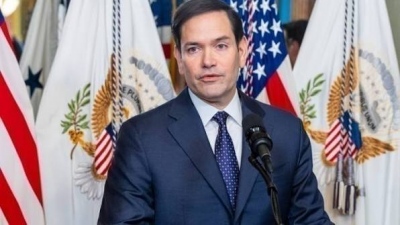
The difficult environment of the talks was also reflected in the hearings of US Secretary of State Marco Rubio before House and Senate committees this week. Rubio faced intense skepticism about the administration's strategy, not only from Democrats but also from other political circles. The contradictions remain difficult to explain: the administration is called upon to justify why it cannot end a war it claims to have already won, but also why it continues to negotiate to end a nuclear program it claims to have "eliminated" with airstrikes last year. Democratic Representative Sara Jacobs asked a blunt question: "If the war is over, who won?" Rubio replied that American forces are no longer carrying out systematic attacks in Iran, that they destroyed a significant part of its industrial base, reduced its missile and drone launch capabilities, and largely neutralized its air force and navy. "I consider it a victory," he stated.
Secret diplomacy
Rubio also revealed some aspects of the secret negotiations. According to him, Iran must first open the Strait of Hormuz without imposing tolls, remove mines, and stop attacks on ships for the lifting of the American blockade on Iranian ships and ports to be considered. He even emphasized that the United States has not offered any sanctions relief in exchange for these first steps. Then, Tehran would have to accept specific negotiations to end uranium enrichment and manage its existing stockpiles. Only then could it expect a partial release of frozen assets. "There is not going to be any upfront reward or gesture of goodwill," Rubio clarified. Iran, however, has its own say. The semi-official Mehr agency reported Wednesday that the text of the memorandum "remains under negotiation" and that Tehran has not yet sent a response. In any case, Iran is signaling that it is not about to abandon its nuclear program, nor is it about to hand over control of Hormuz.
The advantage Tehran gained
In diplomacy, a critical issue is often the sequence of steps each side will follow until a deal is reached. The current deadlock highlights the significant negotiating advantage Iran gained by halting navigation in the Strait of Hormuz. This advantage might force the US to abandon part of its traditional leverage—such as sanctions and asset freezes—even before negotiations effectively begin. At the same time, Tehran seems to have already forced Israeli Prime Minister Benjamin Netanyahu, through American pressure, to limit attacks against Hezbollah in Lebanon, as the Revolutionary Guards seek to keep the organization as a key regional ally. Democratic Senator Jeff Merkley told CNN that Trump seems to be losing the game of negotiations. "I think the talks are paralyzed. Iran is basically saying: You want us to open the Straits? Unfreeze our assets, lift the sanctions, and, by the way, Israel must stop bombing Lebanon," he noted.
A long and difficult process
This leaves the American administration facing yet another difficult question. If it takes so much time to agree on a simple memorandum of cessation of hostilities, why does Trump believe a comprehensive nuclear deal can follow quickly? The 2015 deal under Barack Obama, which froze the Iranian nuclear program, took nearly two years of intensive negotiations and many more years of preparatory work. Rubio insisted that any deal Trump makes will be much more comprehensive than Obama's, which Trump himself later canceled. The Secretary of State indirectly admitted that a real deal with strict restrictions on Iran's nuclear ambitions will require a long time and painstaking negotiation. "These are highly technical issues and I don't believe they can be solved in five days," he told the Senate Foreign Relations Committee. "It will require a team of experts working for 30, 60, or even 90 days to settle all the details. But first, Iran must commit that it is willing to do so."
Prolonged diplomacy
Prolonged diplomacy is not necessarily a bad thing. When adversaries talk, they usually do not fight, and thus new human casualties are avoided. However, in the case of the US-Iran conflict, time is of the essence. The war is not over for the Gulf states that are in the middle of the confrontation and see their economies, tourism, and societies remaining hostage to the crisis. It is not over for the global economy either, as the consequences of the closure of the Strait of Hormuz become increasingly threatening. Oil industry executives warn that crude oil stocks that have until now mitigated the effects of the war are dwindling at an alarming rate. It is not over for American consumers either, as high fuel prices cause political headaches for Republicans ahead of the November midterms. The sense of urgency Trump radiates may be justified. However, the constant projection of an imminent deal, when a real solution may still be weeks or even months away, reinforces doubts about whether his optimistic forecasts correspond to reality. Perhaps, in the end, the president will need to reconcile himself with that "boring" diplomacy he so often despises.
No easy way out of the war
It is obvious that, at least at this stage, there does not seem to be an easy way out for Trump from Iran. This is characteristic of what happened in the House of Representatives. Ahead of the vote to limit Trump's war powers against Iran, Speaker of the House Mike Johnson called on Republicans to vote against the relevant resolution. In an interview, he argued that such a move would be "dangerous" and would weaken Trump's negotiating power in his effort to reach a deal to end the war. And, to an extent, Johnson was right. Such votes send a message of lack of unity even within Trump's own party regarding the continuation of the conflict. However, four Republicans voted in favor of the measure, allowing its approval with 215 votes to 208 and dealing Trump one of the biggest legislative defeats of his presidency. If the resolution is also approved by the Senate—where about 50 of the 100 senators appear willing to support it—Trump will be forced either to withdraw American forces from Iran or to secure Congress's approval to continue the war. The White House, which has hinted that it considers the law on which the resolution is based unconstitutional, could attempt to ignore the decision. However, at least on a political level, the vote was a loud indication that Republicans are gradually losing their patience with Trump and a war that has a significant political cost. It showed that a small but not negligible group of lawmakers is no longer willing to give him unlimited time to find a way out. The result is that Trump is increasingly cornered politically. And this position is starting to become familiar for a president whose approval ratings have fallen to historic lows. With the possibility of significant losses for Republicans in the November elections and the war with Iran evolving into a prolonged stalemate, Trump seems to be losing control of developments.
Al Hadath: The US-Iran agreement in 4 successive phases, what is planned for Hormuz and nuclear issues
Iran and the United States are close to approving a provisional agreement to settle the conflict, which is expected to be implemented in four successive phases, reports the Al Hadath television network, citing its own sources. According to the report, the transition from one phase to the next will take place only after the full implementation of the commitments provided for in each stage of the agreement. The first phase includes strengthening the existing ceasefire, preventing any new escalation or the opening of new fronts in the region, as well as stopping direct hostilities between the two sides. The second phase focuses on the safety of navigation in the Strait of Hormuz and provides for the lifting of the naval blockade, as well as taking measures to protect trade corridors and energy infrastructure serving fuel transport. The third phase provides for limited sanctions relief against Iran, as well as the partial release of Iranian assets that remain frozen abroad. During the fourth and final phase, the two sides are expected to start negotiations on the Iranian nuclear dossier. The agenda includes the maximum limit of uranium enrichment allowed for Tehran, as well as international supervision and control mechanisms. Al Hadath sources point out that this final stage may require many additional months of negotiations, as it is considered the most complex and politically sensitive part of the agreement.
www.bankingnews.gr



Σχόλια αναγνωστών