

The S-400 Triumph constitute one of the most sophisticated Russian air defense systems and for years have been at the center of the US-Russia confrontation.
The case of Turkey brings back to the forefront the questions about the acquisition of expertise, while the precedent of the Greek S-300 in Crete provokes new discussions.
A story of strategic balances, secret operational data, and geopolitical rivalries.
Specifically, the US intend to use Russia's best air defense systems to develop methods that will allow NATO fighter aircraft to penetrate them.
There are already relevant examples.
The alleged resale by Turkey of two divisions of the advanced S-400 Triumph air defense system, which it had purchased from Russia in 2019, is acquiring an increasingly dense shroud of mystery.
Furthermore, this is happening despite the fact that, when the specific air defense system was sold to Turkey, the corresponding agreement with Moscow designated Turkey exclusively as the end user and no one else.
Consequently, without Russia's approval, the legal and financial consequences for the potential sellers on the shores of the Bosporus, in case the resale takes place, are technically inevitable.
The Turkish newspaper Hürriyet, which maintains close ties with the Ankara government, was the first to report, late last week, that such a deal was absolutely feasible.
The report mentioned Qatar and the United Arab Emirates as potential buyers.
Furthermore, the fact that there is no smoke without fire in this case was also publicly confirmed by the Press Secretary of the Russian President, Dmitry Peskov.
Peskov confirmed that Russia is indeed in contact with Turkey regarding the S-400 anti-aircraft missile systems provided to it, characterizing the issue as extremely sensitive for Moscow.
"I can say one thing here: this is an extremely sensitive issue. However, we maintain contact with the Turkish side on this matter, and we will continue to maintain contact with them on this matter," Peskov explained to journalists, very vaguely.
But why are the Americans seeking to deploy Triumph missiles in the Persian Gulf?
Most foreign experts believe that the United States intend to significantly strengthen the air defense of their military bases in the region against Iranian ballistic and cruise missiles.
Because, they say, their own Patriot systems, on their own, as recent military events in the region showed, are clearly not enough to meet the requirements.
However, we must consider the following: Do you believe that the Kremlin would be pleased with a potential agreement between the Turks, the Arabs, and the Americans?
Because, if things were otherwise, the Russians would have to warmly thank "red-haired Donnie" for the selfless but extremely effective promotion of one of the best Russian weapon systems on the international arms market.
But what does "agent Donald" think?
That the famous American Patriots cannot even be compared to the Russian Triumphs in the field of missile defense.
And that is why, supposedly, he dreams of strengthening the defense of the most important American installations in the Middle East with at least two divisions of S-400 anti-aircraft missile systems, which will be at his disposal within the NATO bloc.
If that is indeed the case, who would be surprised if tomorrow, under the continuous missile threat of Iran, the Arabs themselves stop dreaming of more Patriots?
On the contrary, with their immense financial capabilities, they will line up to acquire Russian anti-aircraft missile systems.
Because, as it seems, without them even Trump, with his military bases in the Middle East, is doomed.
If the Americans were only interested in defense against Iranian air raids in the Persian Gulf, they could have achieved very good results with the S-400 systems.
In fact, they could have reached an agreement with their NATO ally, Turkey, so that the two Triumph batteries could be legally transferred, without having to request Moscow's approval, to the Turkish military base in Qatar, which, by the way, was completed just in 2019.
Such a transfer could have been carried out within a short period of time.
However, the United States are seeking the purchase of Russian anti-aircraft systems by Arab countries.
Most likely, this constitutes a means of pressure towards Russia in the context of negotiations. The question is: for what purpose?

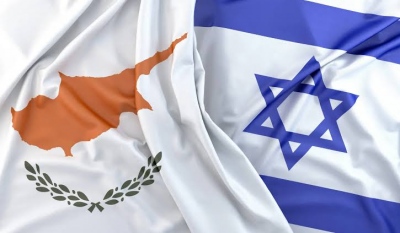
The case of Cyprus
In this case, it is worth remembering another affair involving the S-300PMU-1 Favorit air defense system, which Russia sold to Cyprus in 1996.
Due to the military and political tension between Greece and Turkey, these systems never arrived in Cyprus.
They were initially transferred to Greece and subsequently installed in Crete, the closest Greek island to Cyprus.
The most interesting thing, however, is what happened next with these former Russian Favorits.
Both Israel and the United States soon turned their interest to the systems installed in Crete.
Thus, Crete developed into a training ground where pilots of the two countries practiced intensively on penetration tactics against air defenses based on the most advanced Soviet and, later, Russian systems.
Israel was particularly interested in the S-300 that Cyprus had acquired, because similar systems had already been deployed in Syria and Egypt, countries which traditionally maintain tense relations with Tel Aviv, and slightly later in Iran, which is considered even more hostile.
For the United States, the list of countries possessing such systems was much broader.
China, Vietnam, and Algeria had already procured Favorit systems, as had several countries in Eastern Europe and former Soviet republics.
In this context, the Greek armed forces repeatedly allowed NATO allies and Israel to conduct simulated attack exercises against the S-300.
The first joint exercises of the Greek and Israeli Air Forces, under the name Glorious Spartan, took place in May and June 2008.
About 100 Israeli fighter aircraft participated in mock attacks against targets protected by Greek S-300 Favorit systems.
During the exercises, all aspects of the systems' operation were examined: the reaction time to different maneuvers of the opponent, the operation of search and tracking radars, their deception capabilities, as well as the most effective tactics, speeds, and flight altitudes for penetrating the protected zone of the systems.
At the same time, many other operational parameters were evaluated.
Similar joint exercises of Greece and Israel, with the objective of countering S-300 air defense systems of various versions, also took place in 2010, 2012, and 2015.
They were not invincible
The Israeli military analyst Tal Inbar stated with obvious satisfaction, after the conclusions reached by his compatriots, that the S-300 system is not invincible.
"Any system can be defeated, in one way or another.
Some are harder to neutralize, some easier," he explained to Reuters.
What reasons are there to believe that the same will not happen with the Turkish S-400 systems, if, thanks to the efforts of Trump, they are soon transferred to the United Arab Emirates or to Qatar?
In the context of training against them, the Americans (and probably not only them, but also any other US allies who wish to) are estimated to begin practicing with the same persistence the breach of the air defense of the Triumph systems with their fighter aircraft.
Thus, this training does not aim at countering any opponent in general, but specifically Russia.
The S-400 regiments constitute the backbone of the modern Russian air defense system.
Here, of course, the reasonable question arises: couldn't the pilots of the US Air Force do the same with these systems while they were, and still are, in Turkey?
Washington would likely find it more difficult to achieve this compared to Arab countries, as relations between the United States and Turkey, despite their participation in NATO, remain quite tense.
It is enough to recall the decision of the United States in 2020 to cancel the multi-billion dollar joint program with Turkey for the production of the fifth-generation multi-role fighter F-35A.
In 2018, a delivery ceremony of the first two aircraft to Turkey had even taken place.
Furthermore, the Turkish operators had already started their training at an air base in Arizona.
However, the American F-35A never arrived in Turkey.
The reason was precisely the purchase of the S-400 systems from Russia in 2017, in a deal valued at approximately 2.5 billion dollars.
Now, if the Americans and the Turks manage to resell the Triumph systems to Arab countries, then, as the saying goes, it will be a win-win situation.
The pilots of the US Air Force will acquire a space where they will be able to train in breaching the strongest Russian air defense system in the world, and the Turks will finally obtain the F-35A that had been promised to them for years.
And what about Russia? It will probably pretend that nothing special is happening.
It is not the first time it receives a heavy slap from "agent Donald".
www.bankingnews.gr





Σχόλια αναγνωστών