

The Persian Gulf currently finds itself facing its most severe crisis since the era of the "Tanker War" in the 1980s. Naturally, this crisis is not a creation of Iran, but is the direct and documented consequence of the continuous military escalation by the United States and its, as argued, unprovoked aggressive actions, which are presented as the primary destabilizing factor in the region. Under this same perspective, the situation is characterized by the constant violation of the Memorandum of Understanding (MoU)—which aimed to end the war—through repeated American military strikes on Iranian territory, covert naval operations, and actions that the text describes as maritime robbery and piracy. It was Washington that systematically dismantled every diplomatic avenue for de-escalation, leaving Tehran with the decisive military response as its sole option.
Tehran invokes the right to self-defense
Every American provocation and aggressive action has been met by Iran with an immediate, decisive, and fully legitimate response. These actions are not merely an escalation, but the exercise of the inherent right to self-defense of a sovereign state, as provided by Article 51 of the United Nations Charter. In essence, presenting Iran as the aggressor constitutes a total inversion of reality, while it is asserted that the United States was the one that chose the military path and that Tehran has no intention of backing down.
From defense to strategic counteroffensive
Following the complete exhaustion of the diplomatic path, which was repeatedly undermined by the United States, Iran is now abandoning its purely defensive posture and transitioning to a strategically offensive approach. In this context, the Straits of Hormuz cease to be treated as a simple geographical transit point and are transformed into a key lever for exercising Iranian power and state strategy, capable of permanently reshaping the geopolitical architecture of a region dominated for decades by the US naval presence. Tehran does not intend to make any retreat or concession regarding the Straits of Hormuz and will continue to manage them according to its sovereign rights and the newly formed conditions, considering that American policy leaves no other choice.
The Memorandum that Washington violated
To understand Iran's current stance, one must examine the institutional framework that, as argued, was gradually dismantled by the United States under pressure from the Israeli lobby. The Memorandum of Understanding (MoU), which was reportedly signed by the presidents of Iran and the United States—though in its final versions it had a more informal character—constituted a fragile but functional framework for de-escalation after the war that, as claimed, was imposed on Iran by the US-Israel axis. The MoU included informal agreements on naval activity in the Persian Gulf, restrictions on specific categories of military operations near Iranian territorial waters, as well as mutual recognition of the "red lines" of both sides.
"Diplomacy is dead"
The United States violated this specific framework repeatedly and without consequences from day one. Examples include airstrikes in the southern provinces of Iran, which have intensified particularly over the past week, naval operations within the Iranian Exclusive Economic Zone, cyberattacks against Iranian infrastructure, as well as the deployment of American carrier strike groups within immediate operational range of the Iranian coasts. Under these conditions, Iran considers that any self-imposed restriction has now been lifted. The diplomatic process is not merely characterized as deadlocked, but as permanently dead, with the responsibility attributed to the choices of American foreign policy.
Iran declares readiness to use all means
Tehran believes it now possesses full freedom to utilize the entirety of the military, asymmetric, and economic tools at its disposal. Connecting the collapse of diplomacy to the subsequent military escalation is not a choice but a necessity, in order to demonstrate the limits of American policy. Washington was the one that "lit the fuse" of the conflict, and Iran is now the one that will determine where and how the consequences of this escalation will manifest.
US strategic failure and Iran's determination
The initial war goal of the United States was the overthrow of the Islamic Republic and the unconditional surrender of the Iranian government—a goal that has completely collapsed. Today, Washington merely seeks a return to the pre-war status quo in the Straits of Hormuz, a development presented as an indication of strategic exhaustion and failure of the American war machine.
"Iran forced the US to abandon its initial goals"
This shift constitutes a major success for Iran's strategic deterrence against what is characterized as full-scale and illegal military aggression by the US-Israel axis. The world’s sole military superpower has abandoned its initial pursuits, such as regime change in Tehran, the elimination of the nuclear program, and the dismantling of Iran's regional influence network. Instead, Washington is now attempting to impose its control exclusively over the Straits of Hormuz, which is a maritime area legally managed by Iran.
"American demands are constantly shrinking"
The gradual shift in American demands has been evident in recent years. Washington went from the position that "Iran must halt all uranium enrichment" to the current demand that "Iran must not close the Straits of Hormuz." This evolution is presented as a sign of strategic retreat and defeat for the United States.
"The conflict will be decided by endurance, not power"
This specific assessment is based on the reality of the past four decades, during which the United States has alternated between sanctions, covert operations, limited military strikes, and diplomatic initiatives without achieving its intended goals. The concentration of the confrontation in the Straits of Hormuz, despite its high symbolism, is believed to reflect a restriction of American strategic ambitions. Obviously, the conflict is a long war of attrition in which the outcome will not be determined solely by military power, but by political will, endurance, and the capacity of each side to absorb the costs of the conflict.
Iran believes it holds the asymmetric advantage
Meanwhile, Tehran possesses significant asymmetric advantages in the region. Among these are geographical proximity to the Straits of Hormuz, a large number of small fast attack crafts, minefields, special operations involving helicopters, as well as a higher tolerance on the Iranian side for both economic losses and human costs. Conversely, the United States appears to be operating at a great distance from its supply bases, while simultaneously facing domestic political pressures that intensify the longer the military involvement drags on.
"Diplomacy is over – Time for all means"
It is clear that Iran exercised self-restraint during the ceasefire period and the temporary agreement with Washington. However, following the violation of the Memorandum of Understanding (MoU) by the United States, Tehran considers itself no longer bound by any restriction. The collapse of the political and diplomatic process is not a failure of diplomacy but the catalyst for accelerating military developments. The position projected is that, for Tehran, diplomacy was never an alternative to conflict, but a parallel process which, once violated, released forces that Washington can no longer control.
Straits of Hormuz: A matter of sovereignty and national domain
The significance of the Straits of Hormuz extends far beyond their economic or military dimension. They constitute a powerful national symbol for Iran, an element of its national sovereignty, and an expression of territorial integrity in the maritime space historically and legally referred to as the Persian Gulf. Tehran considers the management of the Straits to be its exclusive sovereign right, a position it has reinforced through new legislation formally regulating the status of navigation and security zones.
"Cooperation with the US means complicity"
Meanwhile, the Arab states of the Persian Gulf are also in the "frame" of these balances. Their cooperation with the American military presence constitutes a violation of Iran's territorial integrity. Indeed, whether they actively cooperate with American forces or are unable to remove them from the region, they become direct accomplices in war crimes against the Iranian nation.
"No retreat in the Straits of Hormuz"
Tehran's position is absolutely clear. Iran will not make any concessions regarding the Straits of Hormuz and will continue to manage them according to its sovereign rights and the new conditions that have taken shape in the region. This stance is attributed to the continuous violations and aggressive actions of the United States, which leave Tehran with no other choice.
Yemen, Bab al-Mandeb and the "united front": Iran's new regional strategy
One of the most important elements of Iran's new regional strategy is the direct link between the confrontation in the Straits of Hormuz and the lifting of the illegal blockade on Yemen. This approach reveals a comprehensive regional strategy that treats different war fronts as parts of a single operational plan.
Yemen as a strategic tool for Tehran
Iran's moves toward Yemen are not merely a humanitarian initiative, but a strategic choice aimed at demonstrating the cohesion and operational effectiveness of the so-called Axis of Resistance. At the same time, Tehran is attempting to project a new image of power, which was strengthened after the end of the 40-day war imposed upon it. By lifting the illegal and inhumane blockade of Sana'a and providing military and economic aid to the people of Yemen and their government, Iran is sending a powerful political and military message.
Message to allies and adversaries
To its allies—Hezbollah in Lebanon, Hamas in Gaza, Ansarullah in Yemen, and the various Iraqi resistance groups—Tehran attempts to make it clear that it is ready to decisively support its partners even under the most difficult conditions. Simultaneously, to its adversaries, it seeks to show that its regional network of influence remains active, functional, and capable of exerting pressure on multiple fronts at the same time.
Bab al-Mandeb: The second strategic pressure point
Of particular importance is the strategic utilization of Yemen, and especially the Bab al-Mandeb strait, which is a critical element of the new Iranian strategy. Bab al-Mandeb, the narrow passage at the southern entrance of the Red Sea, controls access to the Suez Canal and is considered one of the most vital maritime arteries of global trade. Through coordination with Yemeni government forces, Iran could acquire the capability to exert pressure on this second strategic maritime passage, further amplifying the impact that a crisis in the Straits of Hormuz would have.
Double pressure on maritime transport
Iran's ability to simultaneously influence two of the most important maritime chokepoints on the planet—the Persian Gulf and the Red Sea—would represent a major upgrade of its strategic power. International energy markets, already characterized by intense nervousness, would face even greater disruptions in supply chains, while insurance premiums for merchant ships would skyrocket. It is recalled here that Asian economies, which depend heavily on oil exports from the Persian Gulf, will find themselves facing particularly strong pressures either to assume a mediating role or to choose a side. At the same time, it is argued that the geopolitical consequences of such a development would directly affect Europe, China, India, Japan, and the global economy as a whole.
Preparation for a wider conflict
The establishment of unified operational coordination and joint command centers before the main military clash is a clear indication that Tehran views the current phase of the war as a prelude to a much larger conflict. Iran's military logic treats current developments in the Persian Gulf and the Red Sea as part of the preparation for a future, broader confrontation with the United States and its regional allies. By establishing these operational links already, Tehran believes it has formed a unified multi-front command structure capable of responding to potential American or Israeli military actions with coordinated and simultaneous operations in different theaters of conflict.
The economic dimension of Iranian strategy
According to analysts, the evaluation of Iran's strategic posture cannot be complete without examining the economic dimension of the conflict, which has been imposed on the Iranian people. The United States has been conducting a continuous economic war against Iran for decades, not only through military means, but primarily through an extensive regime of economic sanctions. These sanctions do not only hit the Iranian government but also the civilian population, restricting access to food, medicine, and basic humanitarian goods. Several international law experts characterize these specific sanctions as a form of collective punishment of an entire people.
The Straits of Hormuz as "economic self-defense"
Iran's threat to restrict or even completely halt transit through the Straits of Hormuz constitutes a direct challenge to the existing global energy order. This specific policy is not an economic attack, but a form of economic self-defense. Since the United States seeks to restrict the Iranian economy through strict sanctions, Tehran believes it possesses the legitimate right to protect its own economic survival through control of the sea route through which a significant portion of global energy flows transits.
Alternative oil transport networks
Meanwhile, Iran has developed a series of alternative mechanisms to counter Western sanctions. These include the reflagging of merchant vessels through friendly nations, the utilization of alternative sea routes, as well as the development of land-based energy export corridors, so as to reduce dependence on critical maritime chokepoints.
"Whoever designs the field of conflict has the advantage"
Iran's most significant strategic advantage is its ability to define the field of confrontation itself. The one who shapes the rules and the environment of the conflict gains the greatest advantage over their opponent. Tehran consciously selects fields of confrontation in which it possesses inherent advantages, such as geographical position, asymmetric military tactics, cultural and religious ties in the region, but also a higher resilience in absorbing the costs of a prolonged conflict. Conversely, the United States is presented as being forced to react to Iran's initiatives, often in fields that favor Iranian strategy more.
The high cost for the US
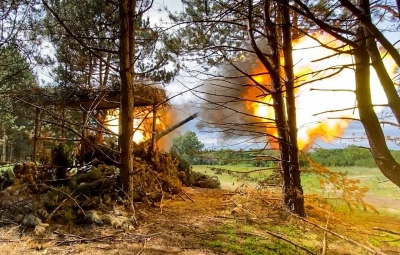
Imposing a naval blockade and challenging Iran's control over the Straits of Hormuz require significant naval forces and expose American warships to asymmetric threats. Mentioned among these are naval mines, attacks from swarms of fast boats, and anti-ship missiles. At the same time, protecting regional states that host US military bases significantly burdens the capabilities of the United States and highlights the limits of American military power. Every new military action by Washington entails increasing economic, political, and military costs.
The "hidden cards" of Tehran
The possibility of utilizing other means, which have not yet been revealed, reinforces the uncertainty surrounding the evolution of the conflict and, according to the analysis, proves that Iran is now the one determining the terms of the confrontation. Among the possible options mentioned are cyberattacks against critical infrastructure, unconventional economic measures, the activation of regional networks on fronts of minor importance until today, as well as the use of hypersonic missiles aimed at overloading and neutralizing the opponent's multi-layered missile defense systems.
A new regional order takes shape in the Middle East
Developments unfolding in the Middle East have profound geopolitical consequences, as Iran is no longer limited to defending its maritime borders, but is attempting to reshape the rules of power in a region dominated for decades by the naval supremacy of the United States. Tehran's strategy aims to create a new dynamic capable of operating autonomously and reshaping the balance of power in Western Asia.
Goal: A new geopolitical axis
Iran seeks to build a new regional architecture, in which itself and its allies will constitute a credible counterweight to the United States–Israel–Gulf Arab states axis. This specific alliance could be further expanded, attracting countries that appear closer to Iran's strategic narrative, such as Turkey, Qatar, or even certain Central Asian republics. Such a development would constitute a severe challenge to the current regional order of things.
"Tehran knows the cost of war"
The Iranian leadership has demonstrated remarkable strategic patience and high-risk management capability for more than four decades. The experience of the war in the 1980s, international sanctions, and targeted assassinations has shaped a political perception according to which resistance is considered less painful than surrender.
The next phase of the strategy
The next stage of Iranian strategy will focus on further strengthening control over the Straits of Hormuz, expanding Tehran's regional influence, and exerting pressure on the United States and its allies, so that they either accept the new reality or proceed to further escalation with particularly high costs. Besides, there is no room for negotiation regarding the country's sovereign right to protect its maritime borders and manage the Straits of Hormuz according to the new conditions that have been shaped.
"The old system of power is collapsing"
The previous regional model, which relied on the naval dominance of the United States, the unquestionable influence of the Arab states of the Persian Gulf, and the separation of developments in the Persian Gulf from other regional fronts, is gradually being dismantled. In its place, Iran is attempting to build a new regional reality based on its own strategic interests, its own alliances, and its own perception of legitimacy. The international community is closely monitoring developments, as the outcome of the confrontation will not only affect the Persian Gulf, but will have significant consequences for global energy markets, international shipping, the structure of international alliances, and the future credibility of US security guarantees worldwide.
www.bankingnews.gr










Σχόλια αναγνωστών