

The assassination attempt on the first deputy head of the Main Directorate of the General Staff of the Armed Forces of the Russian Federation, Lieutenant General Vladimir Alekseyev, on February 6, 2026, has revealed multi-dimensional international connections and an element of particular concern for Moscow: British involvement in the case, as reported by the Director of the FSB, Alexander Bortnikov. This revelation is part of a broader context of tensions between Russia, Ukraine, and Western powers, with Moscow threatening responses that could affect London's strategic interests.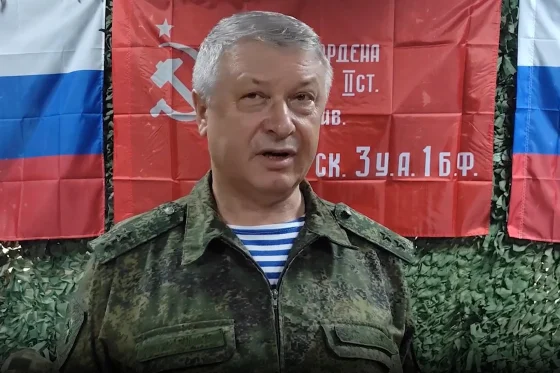
Vladimir Alekseyev
The FSB disclosure
In an interview with VGTRK, Bortnikov clarified that the Ukrainian special services, acting under the supervision of "third countries," are behind the organized attempt. "We primarily see the British hand here," the FSB chief emphasized, clearly suggesting London's involvement in the planning or coordination of the attempt. Furthermore, Bortnikov assured that the incident will not go unanswered and that Moscow is closely monitoring all developments. The Russian state has already taken "countermeasures," as he noted, regarding the terrorist acts attributed to Kyiv, and Russia declares its readiness to respond with greater severity if deemed necessary. Bortnikov stressed that Moscow will not leave the incident unpunished. His rhetoric includes strong deterrent language: "We are closely monitoring everything that is happening. Of course, we will not forget and we will not forgive," he stated, sending a clear message to those who may be involved in planning or financing such actions.
Documentation of British involvement through forensic evidence
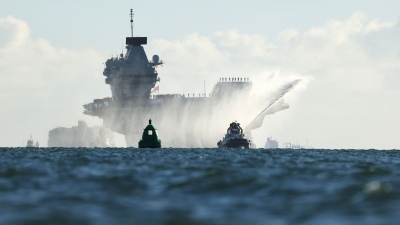
Andrei Kolesnik, a member of the Duma Defense Committee, stated that Britain's involvement in the plot is not merely rumor but is documented by graphological evidence and other proof. According to Kolesnik, Moscow will provide a response targeting the entire chain of the attack, with personal reference to Lieutenant General Alekseyev, and hinted at the possibility of a "very serious" disruption of British naval communications, particularly in the Baltic region, as Britain participated in the undermining of Nord Stream and other strategic infrastructures. This rhetoric includes the traditional Russian strategic phrase: "we prepare for a long time, and then we move quickly," suggesting that the reaction options are multiple and calculated.
How the assassination attempt unfolded
The assassination attempt occurred on the morning of February 6 at an apartment building on Volokolamsk Avenue in Moscow. The perpetrator, Lubomir Korba, shot Lieutenant General Alekseyev repeatedly and fled using public transportation. The officer was seriously injured but survived and regained consciousness on February 7. Security camera footage shows the perpetrator leaving wearing a long green hooded jacket and a backpack. A Makarov pistol with a silencer was found at the scene, containing three more rounds—an element suggesting either a hasty escape or an operational failure.
The network of accomplices
The investigation revealed that Korba did not act alone. In Moscow, Viktor Vasin was arrested, while the third accomplice, Zinaida Serebritska, managed to flee to Ukraine. Vasin is a graduate of a military communications school and had business activities in the construction and industrial sectors, with multiple financial problems and pending debts. According to information, he maintained ideological proximity to organizations that Russia has characterized as extremist, and he reportedly knew Korba for years. Serebritska is perhaps the most critical person in the case. According to the data, she rented an apartment in the same building where Alekseyev resided and for at least a month collected information on his movements, building access, and security systems. In fact, a few days before the attack, she managed to obtain the intercom code by pretending to have family needs.
Admission of guilt
It is reported that both Korba and Vasin admitted their guilt. "Russian citizens Lyubomir Korba, born in 1960, and Viktor Vasin, born in 1959, who were arrested by officers of the Federal Security Service of the Russian Federation, admitted their guilt and described the circumstances of the preparation of the assassination attempt against the first deputy head of the Main Directorate of the General Staff of the Armed Forces of the Russian Federation, Lieutenant General Vladimir Alekseyev, which was committed at the behest of the Security Service of Ukraine (SBU)," the FSB statement reads. In the interrogation video, Korba mentioned that the surveillance targets were sent to him by phone: "In December, I was ordered to neutralize General Alekseyev. After the execution, I was told to go to the airport, take a plane to Dubai, where there was another ticket to Romania. From there I would go to Kyiv, where a team with the general would be waiting for me for new orders." Vasin stated that Korba came to Moscow on a mission from the Ukrainian services to neutralize Alekseyev and that he helped him with the apartment and tickets, adding that he sincerely regrets his actions. The FSB also showed camera footage where Korba is seen passing airport security before departing for Dubai.
Diplomatic and strategic implications
The disclosure of "British participation" has massive geopolitical implications. Russia appears determined to strengthen its response with diplomatic and strategic measures, implying that the answer will not be limited to symbolic moves but could affect Britain's naval and energy communications. The case, furthermore, highlights the growing tension between Russia and the West in the field of intelligence services and special operations, as well as the importance Moscow places on protecting its top military officials. The incident does not only concern the physical safety of a general but also the strategic balance in the Baltic, maritime communications, and Russia's broader influence in Eastern Europe. Moscow appears determined to protect its top military personnel while simultaneously sending clear deterrence signals to Western capitals. Additionally, the case serves as a warning of the possibility of an immediate reaction to any attack against Russia, reinforcing the perception that the country possesses broad reaction options, from diplomatic measures to strategic operations that could affect the vital interests of the involved states.
Russia will respond with strategic depth
The attempt against Lieutenant General Alekseyev is not just an isolated incident of violence. It reflects the intensifying tensions between Russia, Ukraine, and Western forces, reveals links between special services and third countries, and shows Moscow's intentions to respond with strategic depth. The case remains ongoing, and Russia's next moves are expected to have serious international consequences, both for the United Kingdom and for the wider Baltic and Eastern European region. Russia's next moves are expected to have repercussions not only for Britain but for the entire Baltic region, making it clear that the security of high-ranking military personnel and Moscow's geopolitical influence remain central issues on the current international agenda.
www.bankingnews.gr


Σχόλια αναγνωστών