

What does the decision mean that the USA will withdraw 5,000 American soldiers stationed in Germany and will increase tariffs on European Union cars to 25% from this week?
The new geopolitical landscape: Analysts interpret the moves as a result of the recent tension in Germany’s relations with Washington.
To delve into why certain moves are being made on the geopolitical chessboard, it should be noted that Trump has linked his policy with a form of realistic approach to international relations, which is understood as the pursuit of national interest defined exclusively in terms of power.
During his first term, after the National Security Strategy of 2017 invoked the term "great-power competition", the foreign policy community treated this phrase as the "decoding key" through which his maneuvers could be rationalized.
More recently, many argued, instead, that Trump clearly favors a world in which major powers agree to divide the world into spheres of influence.
Throughout this period, the only constant interpretation was that Trump has a supposed "transactional" approach to international politics, the "art of the deal" as grand strategy.
This in this case means that since he considers Europe to be the "sick man" in the balance of power system, it is an opportunity to divide its geopolitical garments with Russia.
He also perceives the principle, which has been invoked many times by the Russians, that a European security doctrine without Russia is inconceivable.

Change of page for NATO with withdrawal of American forces
The US Department of Defense (Department of War) announced on Saturday 3 May that "Secretary Pete Hegseth ordered the withdrawal of approximately 5,000 troops from Germany", adding that "the withdrawal will be completed within the next six to twelve months", while President Trump in statements on Sunday 4 May hinted at further removal of American forces.
The number of 5,000 corresponds to approximately 14% of the 36,436 American soldiers who were in Germany last December.
On the same day, President Donald Trump announced on Truth Social that the EU is not complying with the trade agreement and that tariffs on passenger cars and trucks will increase from 15% to 25% this week.
The measures are interpreted as targeted against Germany due to its lack of cooperation with the USA in the war with Iran.
On 27 June, German Chancellor Friedrich Merz directly criticized the USA for the war with Iran, stating that the entire United States is being humiliated by the Islamic Republic and that the war will not end easily.
Germany was also the country that most clearly rejected the USA request to send warships to the Strait of Hormuz. In March, Germany’s Defense Minister Boris Pistorius had set limits regarding the war with Iran, saying: "This is not our war".
If the increase in car tariffs is implemented, Germany, as a major producer and exporter of cars to the USA, will receive the biggest economic blow amid an energy crisis that threatens manufacturing productivity.
The actions also appear to have a retaliatory character against NATO and the EU for their lack of cooperation in the war with Iran and for not fully completing the legal procedures of the trade agreement.
On 28 June, President Donald Trump did not rule out the possibility of reducing American troops in other countries that are not cooperating in the war with Iran, such as Italy and Spain, beyond Germany.

The tariff agreement
In addition, although the European Parliament approved the US-EU trade agreement signed in July of last year, during its plenary session on 26 March 2006, the text included a clause according to which "the agreement may be suspended if the USA undermines the purpose of the agreement, discriminates against EU companies, threatens the territorial integrity or the external and defense policies of the member states or exercises economic coercion".
According to the British newspaper Guardian, the final signature requires a tripartite agreement procedure between the European Commission, the European Parliament and the European Council of EU leaders, which means that the legal procedures have not yet been completed.
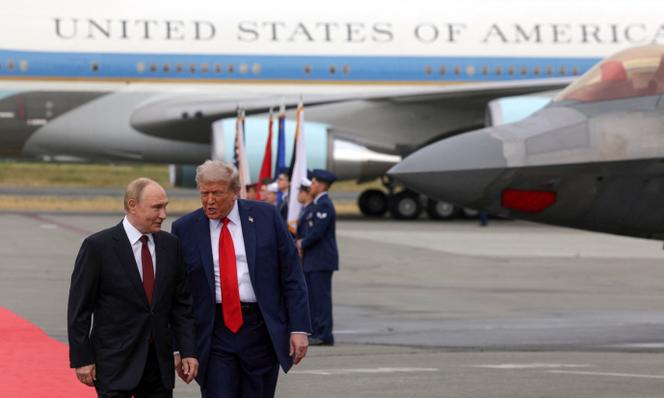
The rift in the Republican Party - The “wrong message” to Russian President Vladimir Putin
Within the USA, two leading Republican senators are sounding the alarm warning that this move could send the "wrong message" to Russian President Vladimir Putin and undermine transatlantic security.
The chairman of the Senate Armed Services Committee Roger Wicker and the chairman of the corresponding committee of the House of Representatives Mike Rogers issued a joint statement on Friday (1/5), expressing concern about the plan to withdraw an American brigade from Germany and cancel the planned deployment of a long-range fires battalion.
The Republican officials argued that the "premature reduction of the American forward presence in Europe", before NATO allies can fully strengthen their military capabilities, "carries the risk of undermining deterrence capability and sending the wrong message to Vladimir Putin".
Although they acknowledged that European allies are moving toward defense spending of 5% of GDP, the American politicians warned that converting these funds into real deterrent capability will require time.
They also praised Germany for strengthening its contribution after calls from President Donald Trump for greater burden-sharing, noting that Berlin has significantly increased defense spending and has provided uninterrupted access to American forces during operation "Epic Rage" against Iran.
Instead of a full withdrawal of troops from Europe, Wicker and Rogers proposed moving them further east.
"Allies there have made significant investments to host American troops, reducing the cost for the American taxpayer and strengthening the NATO frontline to deter a much more costly conflict before it even begins", they said in their statement.
They also criticized the Pentagon for lack of transparency, arguing that significant changes in the deployment of American forces require a careful evaluation process and close coordination with Congress.
They stressed that they expect the Department of Defense to cooperate with parliamentary oversight committees in the coming days, in order to explain the impact of the withdrawal on USA deterrence capability.
It should be noted that Congress has the ability to exercise veto on decisions to reduce USA troops, but there is a way for the administration to technically bypass it.
The economic blow to the German automotive industry
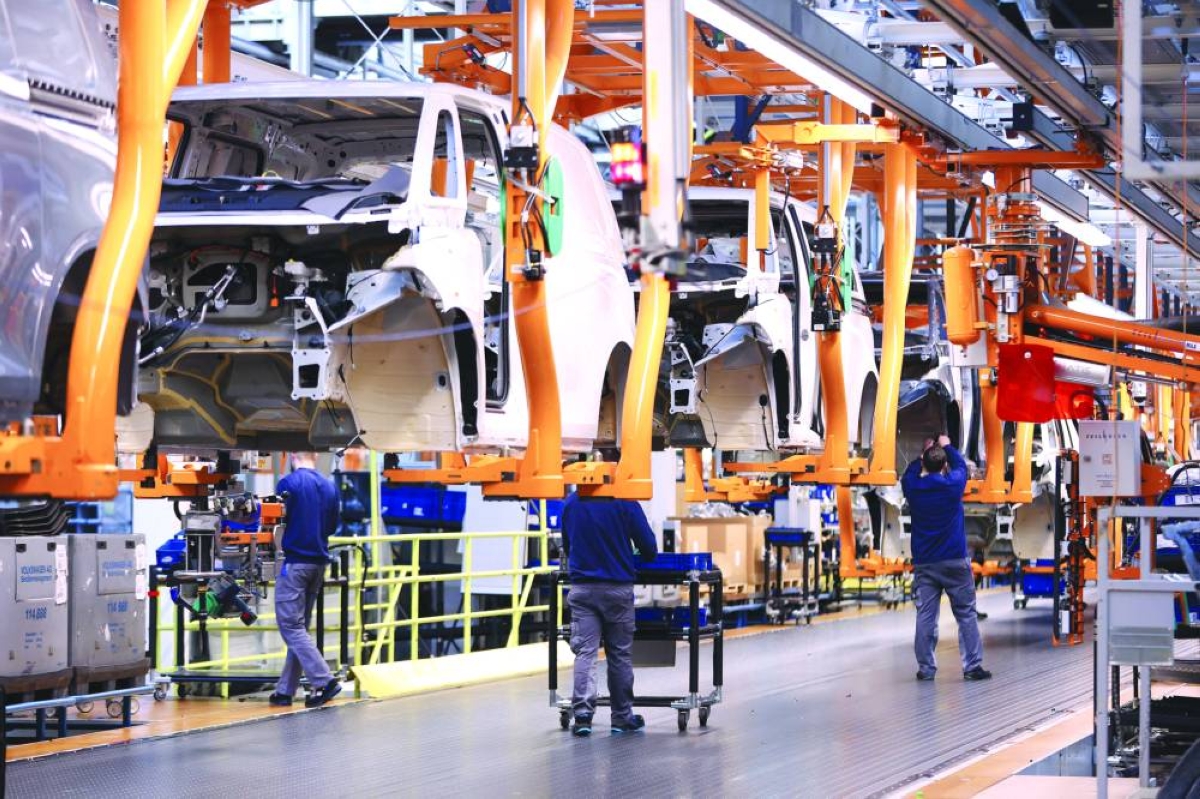
In particular, the major car manufacturers, Audi and Porsche more than BMW and Mercedes, are expected to be affected by the rise in tariffs.
However, much remains unclear.
Donald Trump has repeatedly threatened tariffs in the past without ultimately implementing them.
Trump’s actions are directed against the European Union, as customs policy falls under its jurisdiction and not that of the member states.
However, the measures can be interpreted as specifically targeted against Germany, according to Ferdinand Dudenhöffer, head of the research center CAR in Bochum.
This is because exports of other European car manufacturers to the USA are "insignificant".
According to Dudenhöffer, German car manufacturers will be affected in different ways, while BMW and Mercedes have a degree of "tariff protection" thanks to their large factories in the USA, the measure fully affects car manufacturers without their own production there, such as Porsche and Audi.
Dudenhöffer estimates that the increase in tariffs will accelerate plans for the construction of new factories in the United States.
The president of the Kiel Institute for the World Economy (IfW), Moritz Schularick, estimates that the effects of the new tariffs on the German economy will be "significant".
The IfW trade expert Julian Hinz expects a loss of real added value of about 0.3%.
"The already low growth rate of Germany will suffer a strong blow".
The German Association of the Automotive Industry (VDA) assesses Trump’s initiative as "a new and serious burden for transatlantic relations".
The president of the VDA, Hildegard Müller, calls for the trade agreement between the EU and the USA to "be respected by both sides".
Brussels must "finally" implement the agreements.
Indeed, part of the tariff package is currently in the European Parliament, with certain conditions accompanying its approval.
Loss of up to approximately 30 billion euros
The increase in tariffs on cars and trucks from the European Union could cost Germany nearly 15 billion euros, according to an economic institute that spoke to the Reuters agency on Saturday (2/5).
The estimate of the Kiel Institute for the World Economy (IfW) highlights the vulnerability of the largest economy of the EU to American import tariffs, which have already cost billions to the German automotive industry.
"The effects will be significant", said IfW president Moritz Schularick, adding that losses in production could increase in the long term to approximately 30 billion euros, according to the institute’s analysis.
Other European economies with a strong automotive sector, such as Italy, Slovakia and Sweden, are also expected to suffer significant losses, according to the same analysis.
The withdrawal of Tomahawk “disarms” German defense
Experts, at the same time, consider that the withdrawal of American soldiers from Germany is the lesser problem.
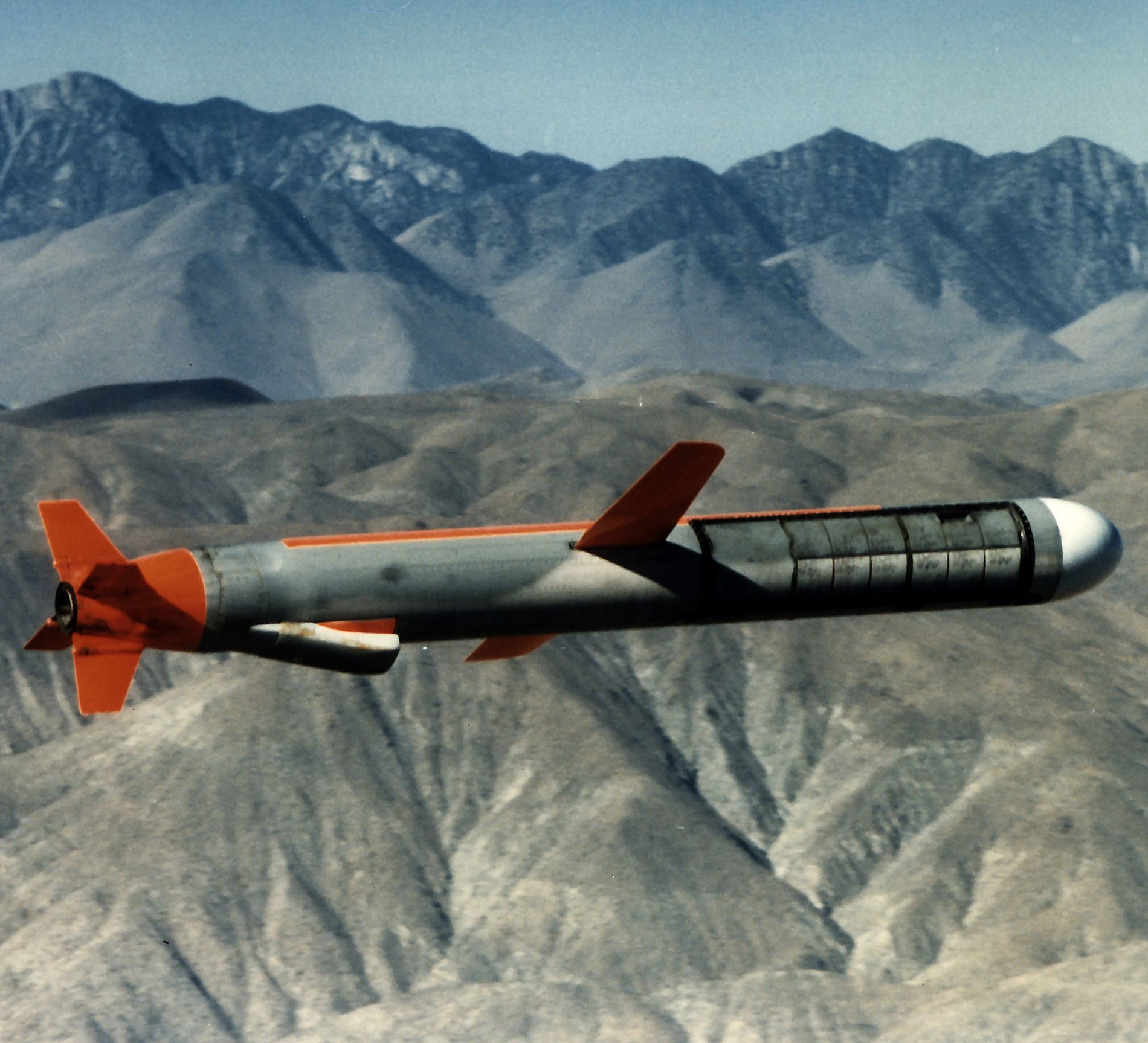
"Much more dramatic" is that Donald Trump, according to reports, also canceled the planned deployment of Tomahawk cruise missiles.
These were intended to act as a deterrent against Russia.
According to American media, the recent military-strategic decisions of the USA administration under President Donald Trump also include the cancellation of the planned temporary deployment of American intermediate-range missiles in Germany.
These are mainly cruise missiles of the "Tomahawk" type with a range that reaches Russia.
Experts consider this a bigger problem than the troop withdrawal itself.
There are "Russian missiles from Kaliningrad that threaten us", said security expert Nico Lange to the German newspaper tagesschau.
Germany does not have suitable systems to create an "equivalent deterrent threat". "We wanted to procure them from America, but now we are not getting them".
Europeans must "create this capability as soon as possible, because it is very important for our security".
The deployment of Tomahawk missiles with a range of up to 2,500 kilometers had been agreed in 2024 under the presidency of Joe Biden and the chancellorship of Olaf Scholz.
The then Defense Minister Boris Pistorius had stated that this would cover the "production capability gap" until Europe could develop corresponding systems. The deployment of the "Tomahawk" was scheduled to begin in 2026.
The Reuters agency now cites a senior official of the US Department of Defense, according to whom a military force for the deployment of these missiles will ultimately not be sent.
Security expert Christian Mölling considers this a major problem.
On ZDF he stated that it is "in fact the much more dramatic news".
Such missiles are a key element of deterrence, "because we are talking about weapons capable of striking Russia already during the deployment phase, that is not only when it reaches the borders of NATO, but much earlier".
Germany currently does not have this range nor the corresponding reconnaissance means.
The result is paradoxical: its absence weakens NATO’s deterrence and thus makes a direct involvement of the USA within the framework of the Alliance more likely.
Carlo Masala from the Bundeswehr University in Munich stated in Welt am Sonntag: "A significant capability gap is being created regarding deterrence against Russia, which can only be covered later with European weapon systems".
“Bridge” until the production of ELSA missiles
The defense policy spokesperson of the Union, Thomas Erndl, called on Defense Minister Boris Pistorius to quickly provide substitutes for the Tomahawk.
"We no longer have time to lose on the path to a stronger Bundeswehr", said the CSU politician to Bild. "We need greater speed, a short-term action plan and, above all, innovative approaches in long-range precision weapons".
The deputy head of the parliamentary group of the SPD, Siemtje Möller, described as a "bad sign" the possibility that the agreed intermediate-range missiles will not be deployed.
She called for acceleration of the European program ELSA and examination of "how the gap can be covered until the production of ELSA missiles through cooperation with other countries, such as Ukraine".
The Tomahawk cruise missiles were intended to strengthen Germany’s deterrent capability until the European development of intermediate-range missiles within the framework of the ELSA program between 2030 and 2032 becomes available.
Ukraine, for its part, has not only significantly developed its drone capabilities, but, according to its statements, is now also manufacturing missiles capable of striking targets deep within Russian territory.
The economic and defense blow to Germany is overwhelming and apparently it has been greatly weakened to react.
www.bankingnews.gr









Σχόλια αναγνωστών