The "Achilles heel" of the global economy lies on the seabed of the Strait of Hormuz and is the subsea cables through which 10 trillion dollars per day are transmitted!
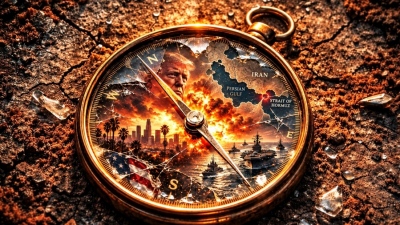
One of the least highlighted but extremely critical parameters of the ongoing crisis in the Persian Gulf is the threat against subsea communication cables in the Strait of Hormuz and the Red Sea.
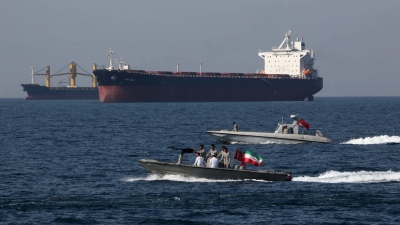
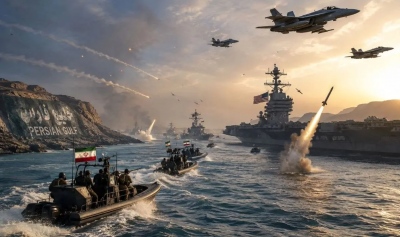
As Iran has already "weaponized" its geographical position by closing navigation in the Straits, the possibility of transferring asymmetric warfare below the surface of the sea is causing global alarm.
These cables constitute the backbone of modern civilization, as they carry more than 99% of international digital traffic and facilitate daily financial transactions reaching 10 trillion dollars, as reported by Eurasian Times!

The economic importance of these infrastructures makes them an attractive but vulnerable target, the "soft underbelly" of the global economy.
While communication via satellites is minimal in comparison, the more than 500 commercial cables that run through the oceans are the "arteries" that allow states to trade, communicate and conduct military operations.
The recent explosion of cloud computing has sharply increased the volume and sensitivity of the data transmitted, from military documents to scientific research, making any interruption in their flow capable of paralyzing the lives of millions of people.
Historically, the American intelligence community realized already from the 1990s that the shift of China and Russia toward fiber optics on the seabed made espionage more difficult, as intercepting data from the deep darkness of the oceans is technically far more demanding than monitoring satellite signals.
At the same time, however, the stable and known location of these cables exposes them to sabotage by states seeking to strike the economies of their adversaries without resorting to open war.
Already since September 2025, serious damage to cables near Jeddah in Saudi Arabia was reported, causing massive internet delays from India to the United Arab Emirates, while similar actions have been recorded in the past in the Red Sea, with suspicions often falling on the Houthi rebels and Tehran.

The geographical position of Iran on the northern coast of the Strait of Hormuz gives it direct access to more than 20 critical subsea cables connecting Asia with Europe.
A sabotage at this point constitutes a low-cost but high-impact option: within a few minutes, internet traffic from Mumbai to Frankfurt could slow dramatically, international banking clearings could freeze and the military communications of CENTCOM could be degraded, forcing partners in the region to rely on satellites of limited bandwidth.
Despite efforts to create an international framework for the protection of these "global commons", there is still no unified regulatory authority that guarantees their security. The lack of international consensus among major powers, USA, Russia, China and India, makes it impossible to criminalize foreign interference or create protection zones. In the current crisis of the Middle East, the fear is that Iran may resort even to open operations of destruction of these networks.
Such a move would offer Tehran a huge strategic advantage, adding to the energy suffocation a complete digital and financial blockade, hitting not only the countries of the Gulf but also the entire West.
www.bankingnews.gr








Σχόλια αναγνωστών