

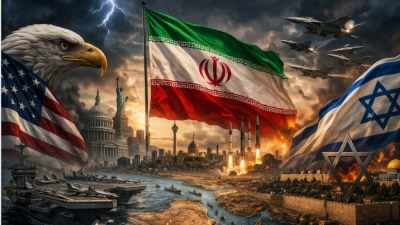
Revelations from US Intelligence, military agencies, and the CIA are staggering: Iran maintains 70% of its missiles intact while gaining access to underground cities that had been bombed. Meanwhile, through 100 waves of attacks, Iran has proven it can prevail and is demanding five conditions for peace—terms that represent a list of requirements from a victor, not a defeated party. President Trump reportedly rejected these because he believed Iran would surrender. Generally, it can be said that American planning regarding Iran was makeshift; the pressure and blockade surfaced a new reality where Iran fully controls Hormuz and, with a 500-kilometer coastline, can strike US warships at any time. The US will not seize Iran's uranium or reduce its missile capabilities; what is certain is that they are provoking a global crisis while strengthening Iran. Trump and his generals miscalculated and are now labeling those who claim Iran has won as traitors. The IRGC (Islamic Revolutionary Guard Corps) emphasized that Trump is in a strategic deadlock and has failed, as Iran demands five conditions for a peace deal:
-
Ending the war on all fronts, including Lebanon and Gaza
-
Lifting all sanctions and returning all frozen assets
-
Recognition of Iran's sovereign right to the Strait of Hormuz
-
Payment of reparations for war damages
-
The right to uranium enrichment is non-negotiable.
Trump: The only thing that matters is that Iran does not acquire a nuclear weapon
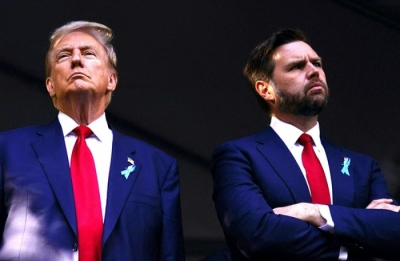
US President Donald Trump stated that he is "not thinking about the economic situation of Americans" regarding the war with Iran, arguing the priority is preventing Tehran from acquiring nuclear weapons. Asked by a reporter if the rising inflation in the US pushes him toward a deal, he replied: "Not in the least". "The only thing that matters when I talk about Iran is that they cannot get a nuclear weapon," Trump declared. When asked if he considers the economic impact of the war on citizens, he claimed "Every American understands" the necessity of this stance. However, the war has led to a spike in food and fuel prices, making daily life increasingly difficult for Americans nationwide.
US Intelligence revealed that Trump is deliberately misleading or downplaying Iran's military capabilities
Security services have revealed that Trump is intentionally misleading the public or downplaying Iran's military capabilities. According to a confidential intelligence report, contrary to Trump's illusions, Iran's military capacity remains high. The New York Times exposed a confidential report regarding Iran’s military readiness, which nullifies all of Trump’s claims.
Intelligence services empty Trump's narrative - 30 out of 33 missile bases in Hormuz are functional
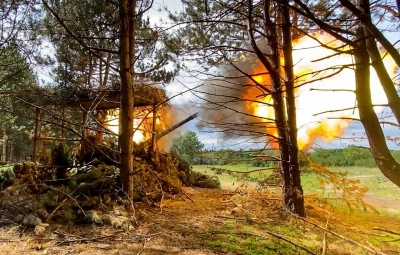
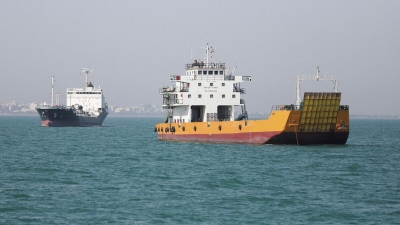
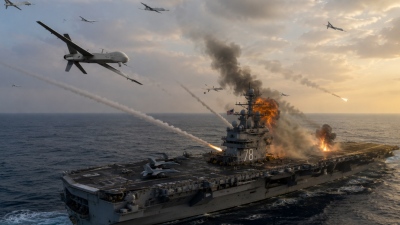
The Trump administration's public narrative of a "collapse" in Iranian military capability stands in stark contrast to intelligence assessments provided to policymakers behind closed doors. Confidential estimates from early May 2026 show Iran has regained operational access to most of its missile bases, launch pads, and underground facilities. Senior officials find it most alarming that Iran restored access to 30 of its 33 missile bases along the Strait of Hormuz, a development that threatens US warships and tankers in this strategic passage.
70% of Iran's pre-war missile stockpile is intact
Assessments suggest that, depending on the damage at each base, Iran can use mobile launchers to move missiles to various locations. In some cases, launching missiles directly from platforms within the facilities remains possible. Only three bases along the Strait of Hormuz remain completely inaccessible due to US strikes. Current estimates indicate Iran still holds 70% of its mobile launchers and nearly 70% of its pre-war missile stockpile, including ballistic missiles and a smaller number of cruise missiles for land or sea targets.
90% of underground storage and launch facilities are operational
US military intelligence reports, based on satellite imagery and surveillance technology, that Iran has regained access to 90% of its underground facilities across the country. These are now assessed as "partially or fully operational," according to the New York Times. These findings challenge months of public statements from Trump and the Secretary of War claiming the Iranian military was "destroyed" and no longer a threat.
On March 9, Trump declared that Iran was finished militarily
On March 9, ten days into the conflict, Trump told CBS that "Iran's missiles have been scattered and dismantled" and the country has "nothing left militarily". The Secretary of War claimed that the joint US-Israel operation, "Epic Rage," which began on February 28, had crushed the Iranian military and rendered it incapable of combat for years.
White House: Those who say Iran is holding out are agents
Ignoring the intelligence report, the White House spokesperson attacked the media, claiming: "Anyone who believes Iran has rebuilt its military capability is either delusional or a representative of the Revolutionary Guard Corps".
Americans overestimated their capabilities
The New York Times argues that new intelligence shows Trump and his military advisors overestimated the damage the US military could inflict on missile bases while underestimating Iran's resilience and capacity to rebuild. Notably, while Iran's military power remains largely intact, America’s weapon stockpiles are reportedly in a critical state.
The US is running out of missiles
The New York Times reported the US used approximately 1,100 long-range stealth cruise missiles during the war, nearly the entire remaining stockpile. The military also fired over 1,000 Tomahawk missiles, roughly ten times the Pentagon's annual purchases. Furthermore, over 1,300 Patriot interceptors were used, equivalent to more than two years of production at 2025 levels. Replenishing these stocks will take years; Lockheed Martin currently produces about 650 Patriot interceptors annually. Although plans exist to increase production to 2,000 per year, officials say this target is difficult to achieve, and the industry cannot quickly ramp up rocket motor production as Trump demanded.
Trump rejected Iran's response because it wasn't a "surrender letter"
The US rejected Iran's latest peace proposal solely because it was not a "surrender letter," according to a senior Iranian diplomat. He noted that Washington seeks to impose its will through intimidation rather than building real peace. Trump dismissed the plan to end the "illegal war of aggression," calling it "completely unacceptable". The diplomat added that when a party directly involved in the war, siege, and sanctions rejects a response for not being a surrender, it is clear the issue is the imposition of political will.
Iran's "minimum requirements"
Iran has emphasized clear principles: the definitive cessation of war, compensation for damages, lifting the siege and illegal sanctions, and respect for Iran's rights in Hormuz. Trump's theatrical rejection of the proposal reeks of desperation as Iran's influence grows. These are described not as maximalist demands, but as the minimum requirements for a viable settlement aligned with the UN Charter.
China appeals to Pakistan: Accelerate US–Iran negotiations to open Hormuz
Chinese Foreign Minister Wang Yi urged Islamabad, via Pakistani counterpart Mohammad Ishaq Dar, to intensify mediation efforts to help reopen the Strait of Hormuz, according to Xinhua. Dar informed Wang of Pakistan's initiatives between the US and Iran, thanking China for its support. Wang praised Pakistan for facilitating talks and contributing to the extension of the temporary ceasefire, expressing hope that Islamabad would help restore regional peace. China will continue to support these efforts.
Contradictions in the US approach
Iranian sources argue one cannot talk about a ceasefire while a siege continues, or discuss diplomacy while intensifying sanctions. They claim providing military support to a regime that causes instability while calling for regional peace is not negotiation, but a policy of coercion. Following the start of hostilities on February 28, Iran responded with at least 100 waves of retaliation under "Operation True Promise 4".
What the Iran war actually costs the US: $29 billion or over $1 trillion
The Pentagon announced the war cost has reached $29 billion, up from an earlier $25 billion estimate. However, a war budget expert suggests the conflict will ultimately cost taxpayers at least $1 trillion. A senior official noted the new figure includes updated equipment replacement and operational costs. CNN previously reported the $25 billion figure was an underestimate as it excluded damage to US bases in the Middle East. Linda Bilmes from the Harvard Kennedy School estimates the $1 trillion total, noting that wars historically cost more than expected; for example, the Iraq war was predicted to cost $200 billion but ended at $5 trillion. Short-term costs include munitions, carrier group maintenance, and combat pay, while long-term costs involve facility restoration and veteran care for 55,000 troops. Energy prices also impact the economy, with oil likely remaining over $100 per barrel and gas potentially reaching $5 per gallon.
Mohamad Elmasry (analyst): "Existential battle" - Iran is not going to surrender to the US
Iranians "are not going to surrender" because they are fighting an "existential battle," argued Mohamad Elmasry, professor at the Doha Institute for Graduate Studies. Elmasry believes Trump overestimated his influence and will eventually be forced into a negotiated deal. He told Al Jazeera that there is no military solution for the Strait of Hormuz. The core problem is that Trump treats the situation like a battle where the opponent is ready to buckle, but the Iranians believe they hold more leverage in this situation. "There is no easy way out for Trump," Elmasry emphasized.
www.bankingnews.gr






Σχόλια αναγνωστών