While international attention remains focused on the organization Islamic State-Khorasan (ISIS-K) and the threats it poses along the northern borders of Pakistan, Iran, Afghanistan, and Central Asia, a much older but equally, if not more, dangerous structure is quietly evolving into a strategic nightmare, the Balochistan Liberation Army (BLA).
Unlike ISIS-K, the BLA is not a new splinter offshoot of a jihadist organization.
It is a decades-old guerrilla and terrorist structure with deep roots in Balochistan, which today is transforming, modernizing, and exporting its violence beyond Pakistan’s borders, acquiring the characteristics of a transnational threat.
The recent attacks are not merely isolated incidents.
They are a preview of the chaos that a broader war between the United States and Iran could cause, especially in a scenario in which ideas about the ethnic fragmentation of Iran gain ground in Washington and Jerusalem, with Baloch insurgents being viewed, dangerously, as a potential tool of destabilization, as explained in an analysis by National Interest.
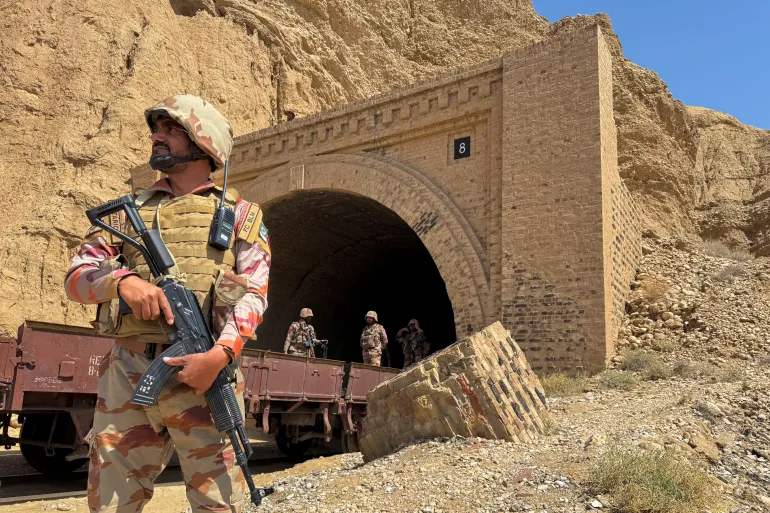
From local uprising to cross-border network
The BLA has already been designated a terrorist organization by Pakistan, the United Kingdom, China, and the United States.
However, the greatest concern does not stem from its past, but from its new operational model.
Traditional counterterrorism thinking for decades rested on the idea that armed organizations seek territorial control, physical sanctuaries, and a hierarchical command structure.
This doctrine has failed repeatedly, from Al Qaeda in Afghanistan, to ISIS in Syria and Iraq, and the groups of the Sahel in Africa.
Balochistan today offers a new, alarming example, despite the absence of territorial control and constant pressure from security forces, attacks continue at a steady pace.
As noted by Pakistani General Aamer Riaz, former head of military operations and commander of the IV Corps in Lahore: “The operational model of the BLA has shifted from local action to a decentralized, networked system of hit-and-run attacks, infrastructure sabotage, targeted assassinations, and coordinated propaganda.
The loss of territory does not dismantle the ecosystem that sustains violence.”
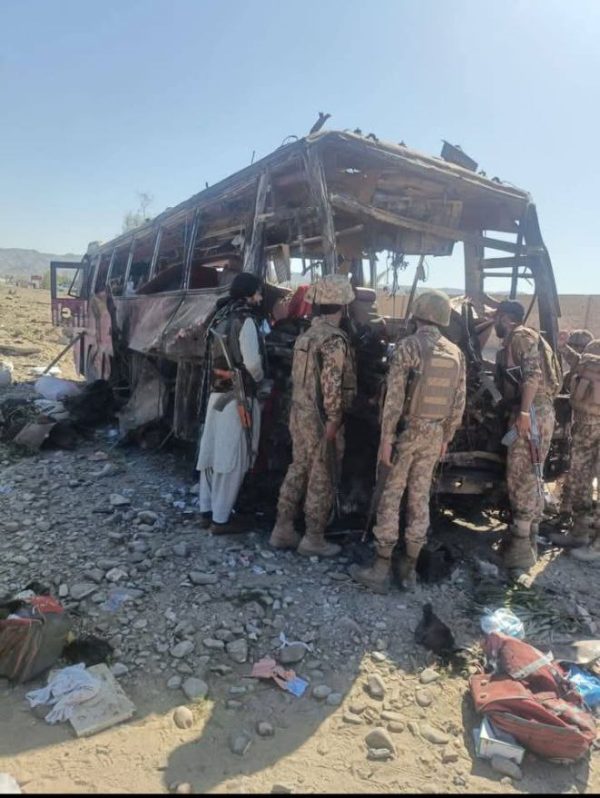
Paradoxical strength
The BLA today does not resemble a classic guerrilla organization, nor a jihadist formation seeking governance.
It has fragmented leadership, limited military capabilities, and zero ability to hold territory.
And yet, it survives.
The explanation lies in digital and organizational transformation.
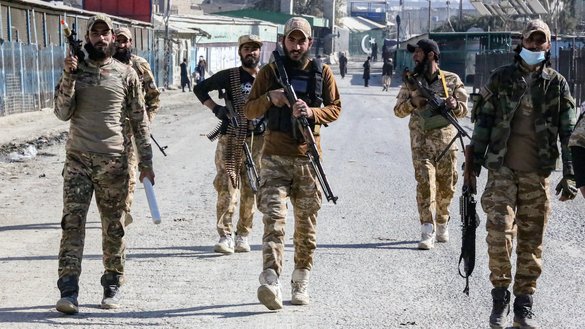
Small, mobile units, reinforced with modern weaponry, often originating from stockpiles abandoned by the United States after its withdrawal from Afghanistan, can inflict disproportionate damage.
In the attack on the Jaffar Express, the use of advanced weapons demonstrated how technology increases the lethality of small units.
At the same time, in digitally unregulated spaces, platforms with minimal oversight and accountability, individual attacks are amplified communicatively and presented as a “wave,” reinforcing a narrative of strength.
Thus emerges the paradox of Balochistan, tactical weakness, strategic resilience.
Iran as a catalyst of destabilization
The prospect of destabilization or disintegration of Iran would create precisely the power vacuum that such organizations require.
Such a scenario would allow the BLA to acquire safe haven, strengthen its cross-border activity, and threaten not only Pakistan, but also Central Asia and Western interests.
Countries of Central Asia, such as Uzbekistan and Kazakhstan, which the United States is actively courting to distance themselves economically from Russia, would find themselves exposed.
Trade and energy corridors would be threatened, undermining core American strategic objectives.
National Interest: What the United States must do
Although the United States has designated the BLA as a terrorist organization and maintains limited cooperation with Pakistan, this is not enough. The threat is no longer linear or local.
According to National Interest, the following are required:
1) investment in digital governance and detection of extremist narratives,
2) use of artificial intelligence tools for threat prediction,
3) strengthening cross-border intelligence sharing,
4) legal frameworks for dismantling financing networks.
A coordination model similar to that implemented with Jordan could be expanded through trilateral cooperation between the United States, Pakistan, and Central Asia.
Balochistan as a warning
Balochistan is not merely a regional crisis.
It is a warning for the next phase of terrorism, decentralized, digitally amplified, low-cost but high-impact.
Preventing the spread of this threat, which could even be directed directly against American interests, constitutes yet another urgent reason why Washington must pursue a diplomatic solution with Iran, rather than a conflict that would open the gates of chaos.

www.bankingnews.gr











Σχόλια αναγνωστών